Melormenis basalis, Homoptera: Flatidae


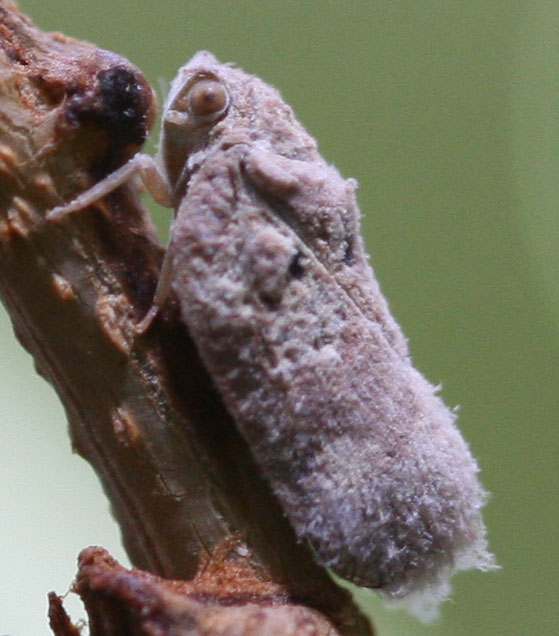
I found this little flatid back in April (30 April 2009) when we were inpsecting a Mehamehame tree, or Flueggea neowawraea, in Lualualei Valley. I was thinking it could be native, but I later learned there are no species of Flatidae native to Hawaii. This particular species is Melormenis basalis, the West Indian Flatid. Not sure how long it has been in Hawaii, but it wasn’t mentioned in “Insects of Hawaii” so it must have arrived sometime after that particular volume was written. The other species of flatid in Hawaii is Siphanta acuta, the Green Torpedo Flatid or Torpedo Bug. It is mentioned in “Insects of Hawaii” and arrived sometime before 1898. These are evidently the only two species of Flatidae known to occur in Hawaii.
Jackson’s Chameleons: Killers of Hawaii Insects and Snails
-
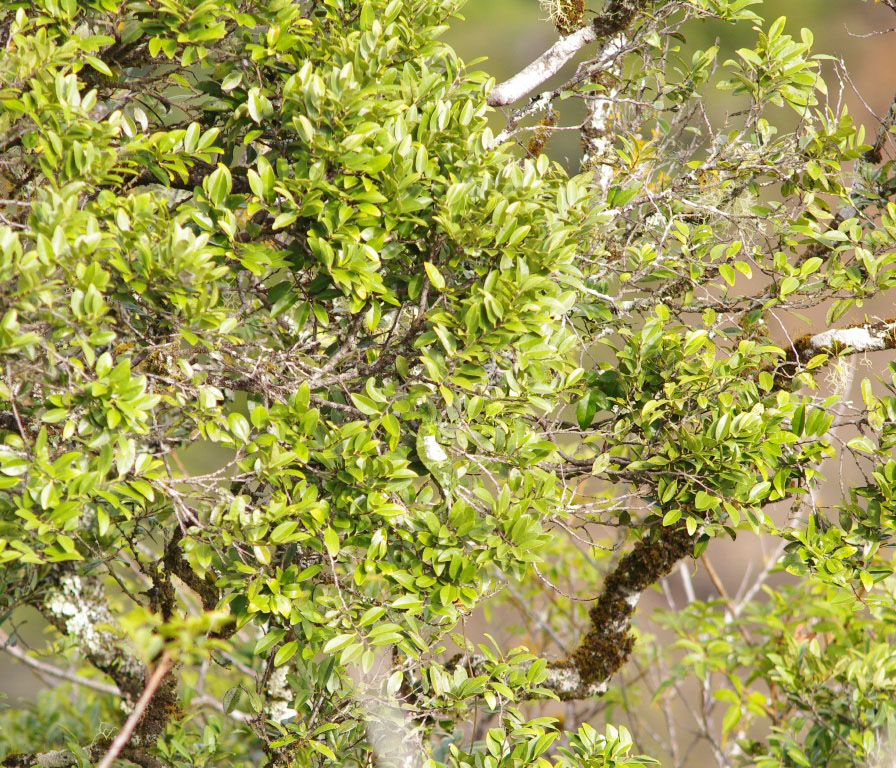
- Jackson’s Chameleon camouflaged in an Ohia and Lama tree.
-

- Close-up.
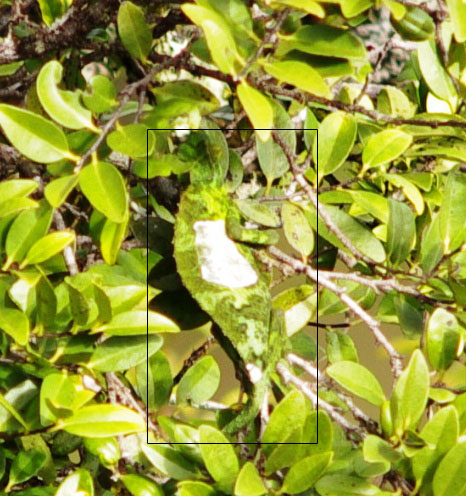
On a recent trip to the ridgeline of Lualualei Valley we were surprised to see a Jackson’s Chameleon, Chamaeleo jacksonii xantholophus . One of the guys I was with happened to be looking at an Ohia tree just off the trail (at about 2,400 ft above sea level) with a pair of binoculars and by chance he spotted a big female. You can see from the pictures that it was nicely camouflaged. I think the white patch on its side is a shedding piece of skin. I thought Jackson’s were found only in the Ko’olaus, so like I said, we were surprised. The next day in the office I called Army Environmental to tell them about it and they were very interested. It seems they have recently been finding them on the ridge to west of the location of our sighting. They have been collecting all the Jackson’s they find and analyzing their gut contents. Unfortunately they have been finding, among other things, native insects and native snails in their stomachs. I gave them the coordinates and description of where out sighting occurred, and amzingly enough they went back the next day a found the darn thing. It had evidently move to a nearby christmasberry tree. They collected it and are going to look at its stomach contents. I really hope the day never comes when I have to start killing these guys as part of an invasive species management project. I grew up loving them and dreamed of owning one as a pet – they rate high on the cool lizard scale. I’ve also always wanted a green iguana…maybe one day.
Anyway, here is some interesting information from Sean Mckeown’s Field Guide to Reptiles and Amphibians in the Hawaiian Islands (Diamond Head Publishing, Inc., 1996)
“Hawaiian Jackson’s Chameleons have all descended from several dozen specimens. In 1972, a Kaneohe pet shop owner, Robin Ventura, received a Hawaii State Dept. of Agriculture permit to bring in Jackson’s Chameleons for sale. They arrived thin and dehydrated, so he released the lizards into his backyard on Kane’ohe Bay Drive, figuring they could be retrieved later, as needed. The chameleons increased in numbers and by the late 1970’s had spread to the nearby watershed area at the base of the Ko’olau mountains. The country of Kenya stopped exporting this species in 1981. So, virtually every Jackson’s chameleon of this subspecies in captivity on the US mainland is of Hawaiian origing or has Hawaiian roots. In the islands, this lizard is one of the most popular animals with young people and is widely kept as a pet. ”
“The Jackson’s chameleon is now well established in Hawai’i. While it is most common on Oahu in areas of mid-elevation in the Ko’olau Range between Kane’ohe and Kailua, it has a wide, disjunct distributon throughout Oahu and can even be found on the much drier leeward side of the island. Additionally, it is now also well established at mid-elevation in several areas on the Kona side of the Big Island of Hawaii and on the island of Maui. In upcountry Maui around Makawao, these lizards are most frequently encountered in secondary disturbed forest areas, in various types of orchards and on hedges in yards. The first reports of this species on the islands of Kauai and Lanai were in 1995. The yellow-crested Jackson’s chameleon is native to the slopes of Mt. Kenya in the country of Kenya in East Africa where it occurs at 6,000-8,000 ft. (1830-2440 m) elevation. It is the largest of the three Jackson’s chameleon subspecies.”
Parental care by Scolopendra subspinipes
Here are a couple pics of a female Scolependra subspinipes that a coworker brought in and we kept for while in big glass jar in our supervisor’s cubicle while she was on TDY.
-
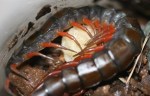
- mother wrapped around her brood
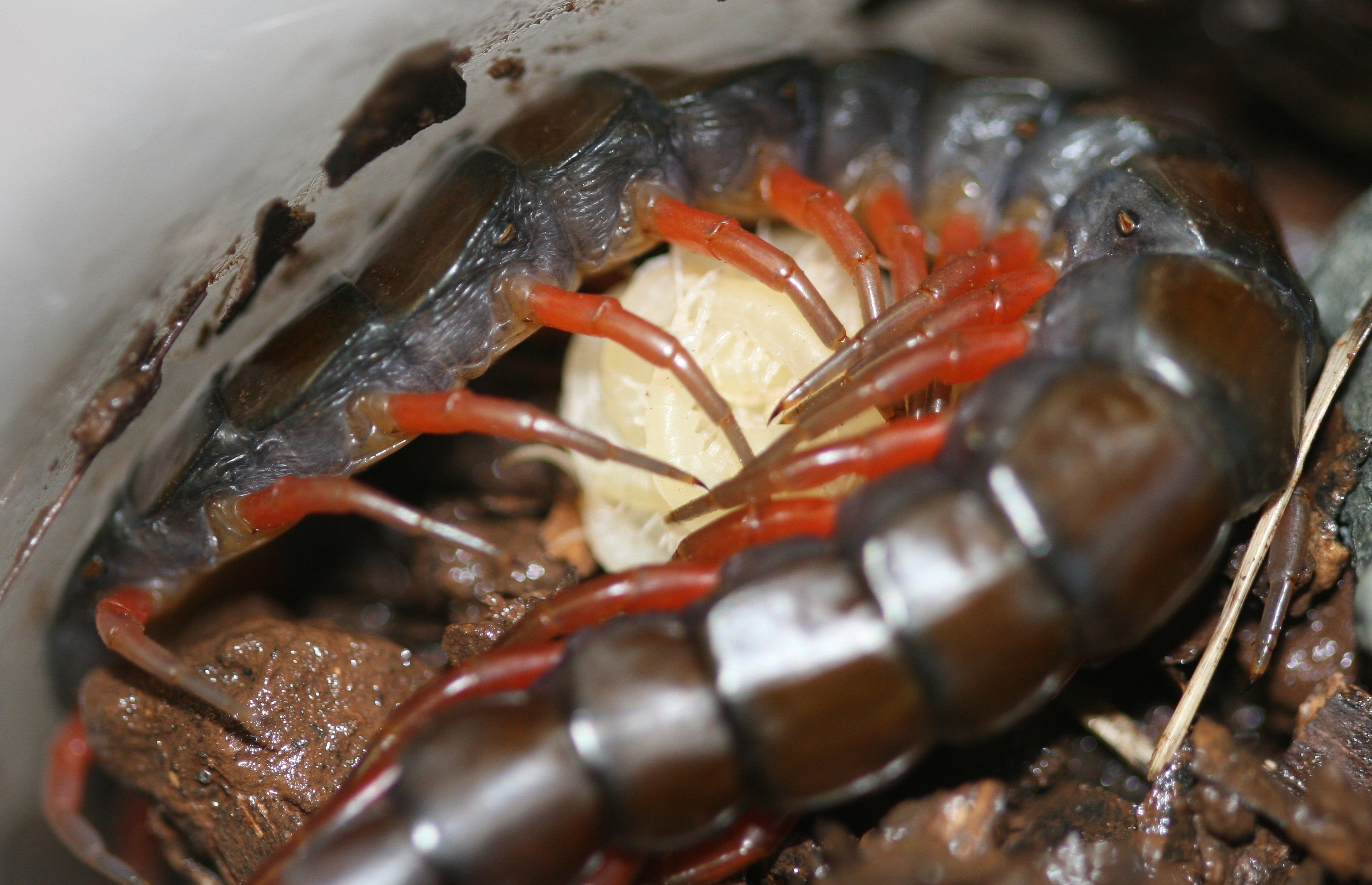
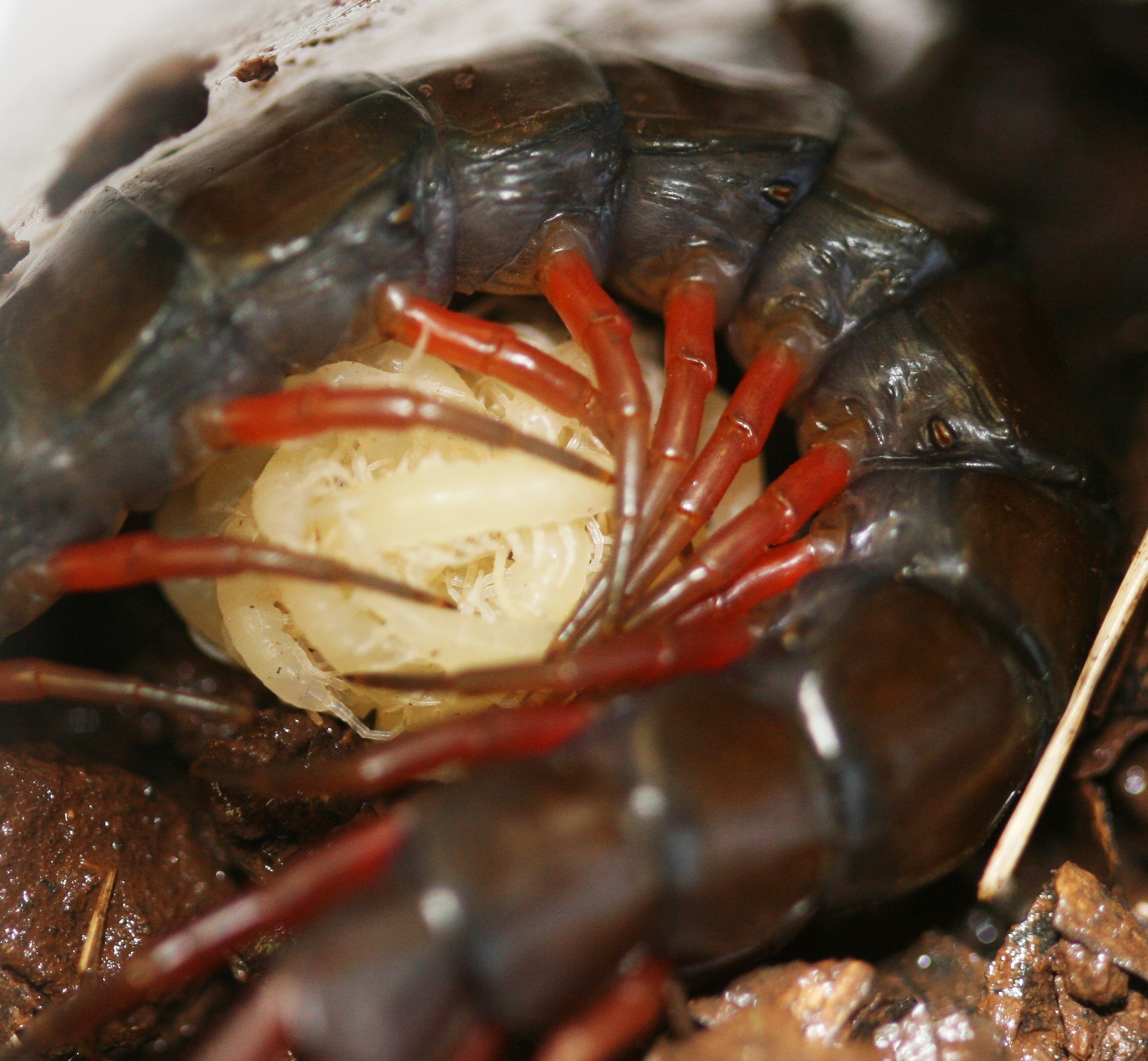
-
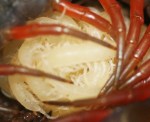
- a close up shot of the protonymphs
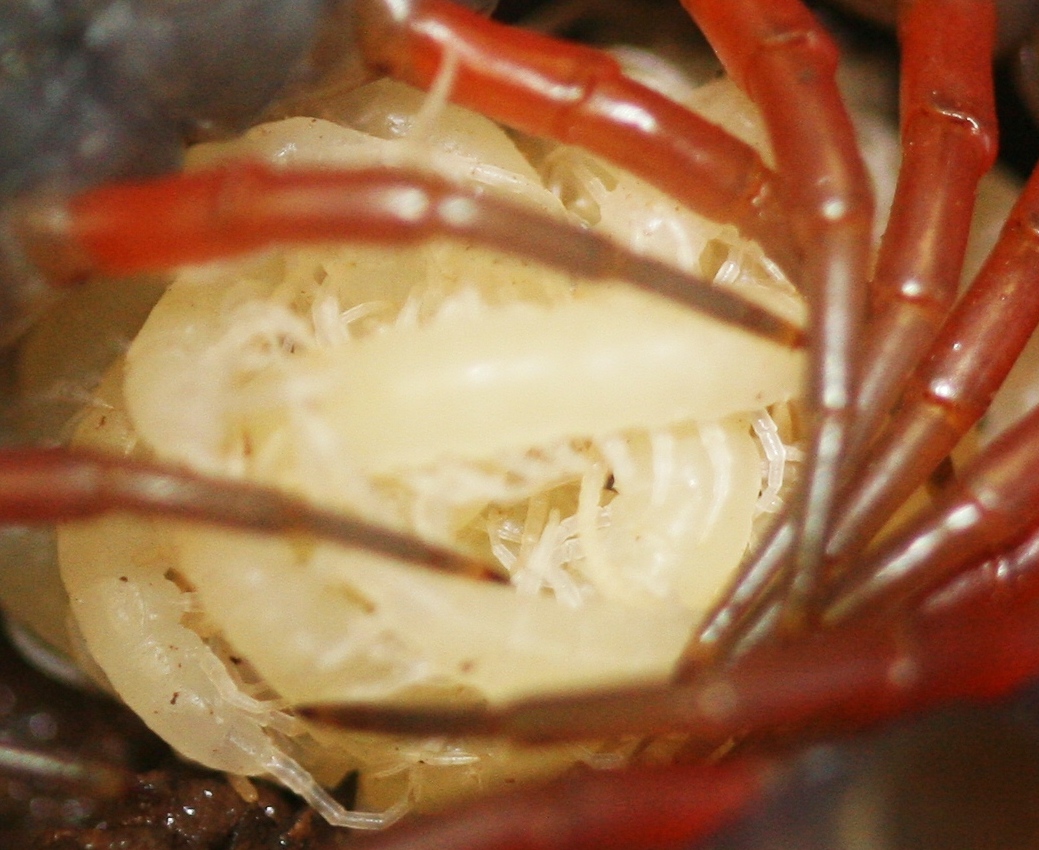
If I remember correctly she was named Betty and as you can see in the images she was caring for a clutch of babies. According to a powerpoint presentation on myriapods (Inventorying Myriapod Diversity in India – A Review) by Dr. Vinod Khanna, these baby white centipedes are called “protonymphs” and in a few weeks they will start to get some color and then in a few more weeks undergo their first molt and venture out on their own. In the office we discussed the matter of parental care by S. subspinipes at some length, even to the extent that one of my coworkers made plans to document Betty’s behavior as she reared her protonymphs. Unfortunately, a second, larger centipede that we were keeping (also in our supervisor’s office) escaped and brought all centipede experiements in the office to a crashing halt. The escaped centipede was never found.
One last thing about centipedes…
I happened across this article online about centipede envenomation and I found it to be very informative. The official reference is Wilderness and Environmental Medicine Vol. 12, No. 2, pp. 93–99, but you can find it online at http://download.journals.elsevierhealth.com/pdfs/journals/1080-6032/PIIS1080603201707004.pdf . The bottom line is you’re not going to die from the bite and the treatment is pain control and routine wound care, but one thing I didn’t know is that the application of heat at the site of the bite may alleviate some of the pain.
I sort of know one of the authors of this paper – Scott Stockwell. He used to be an entomologist in the Army and is a well know scorpion expert. When I was in the Army Reserves, my unit replaced his in Bagram, Afghanistan. He had to leave prematurely due to an accident with a russian pistol – somewhere I have picture of the bullet hole in the tent where it happened. Anyway, I guess maybe he is slightly accident prone since in this paper 3 of the 5 cases described are bites he experienced, and two of them are from the same centipede.
Noctua pronuba (Lepidoptera: Noctuidae)
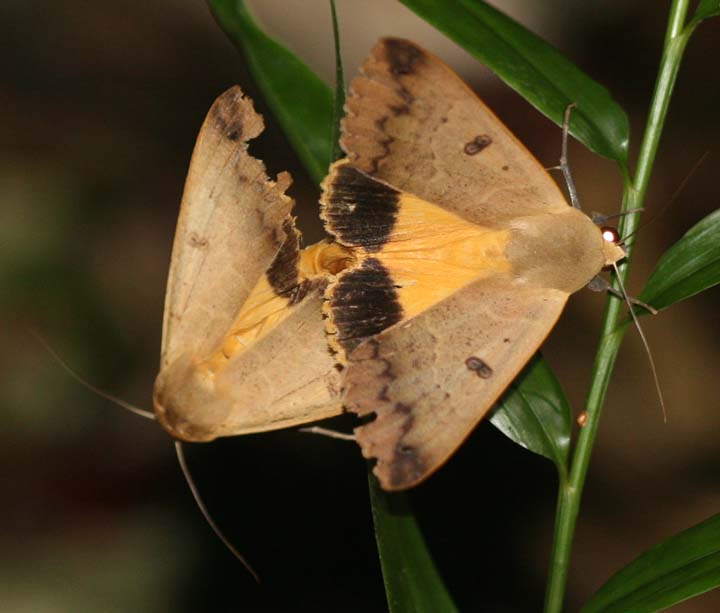
Took this picture of a mating pair of what I think are large yellow underwing moths (Noctua pronuba). We happened upon them while surveying at night for larvae of Hypolimnas octocula marianensis in the Pagat area of Yigo, Guam. There were a also a lot of large sphingids buzzing around our headlamps.
-
- Noctua pronuab, mating pair, Yigo, Guam
Sipyloidea sipylus
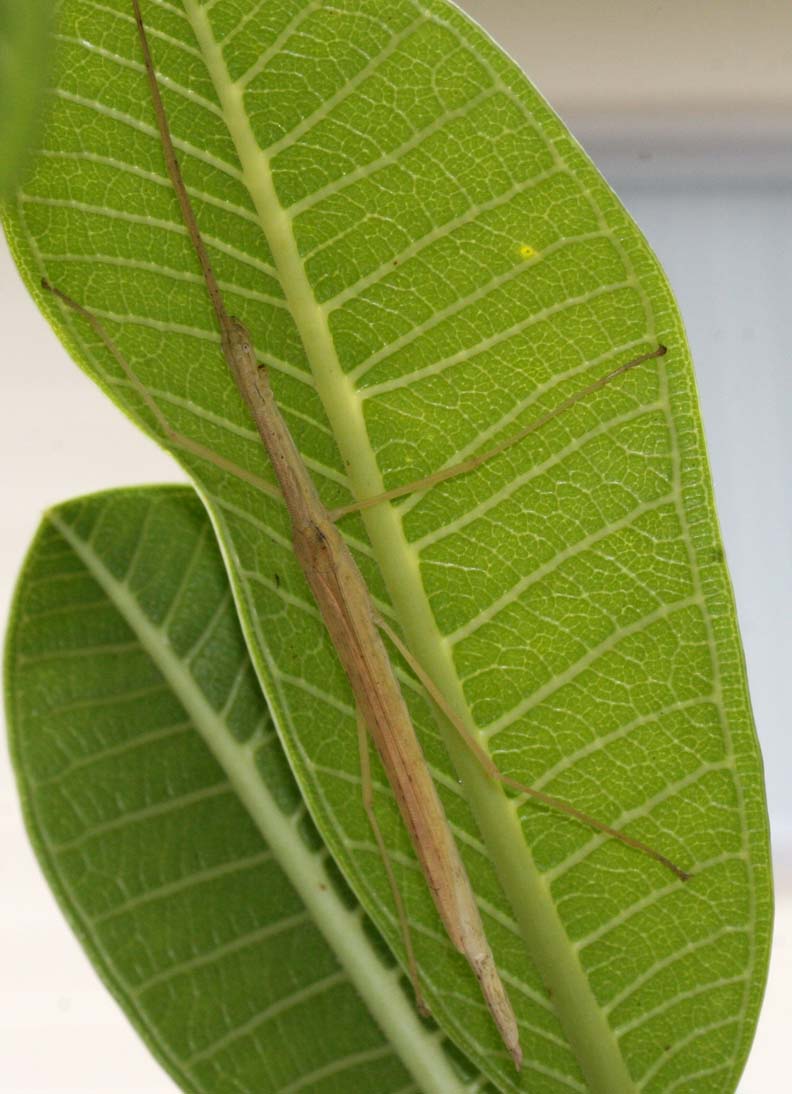
Last year I did an insect presentation at one of my daughter’s preschool and a couple of weeks later I did an entomology presentation for career day at my oldest daughters elementary school. It was a little crazy. For the preschool I did maggot art with them, which is a separate tale that deserves its own telling, and I had various live and preserved insects for them to see. For the elementary school I brought a microscope, collecting equipment, and the same live and preserved specimens that I used for the preschool. Of the live specimens, by far the most popular were the walking sticks. I had acquired 4 or 5 individuals from a friend specifically for these presentations, and the kids loved them. Because they are slow moving, I was able to let the kids hold them and check them out up close. Unfortunately this took its toll on the delicate insects and by the end of it all only one survived. It lost one of its forelegs, but it seemed to otherwise be in good health. Sipyloidea sipylus (Orthoptera: Phasmidae) is not a native Hawaiian species, and I think they are relatively new to the state. I do not know the details, but I recall that they first became established on the big island and then spread to other islands (although I am not sure about this). Because this is an alien species, I was hesitant to let it go after the presentations were over. But it had performed extremely well for the kids and was the sole survivor, so I couldn’t bring myself to kill it either. I ended up just letting it go at Pearl Harbor – probably not the best thing to do, but they’re pretty much ubiquitous on Oahu by now so I don’t think it was a huge deal.
I took a few pics before releasing it:
-
- Sipyloidea sipylus profile
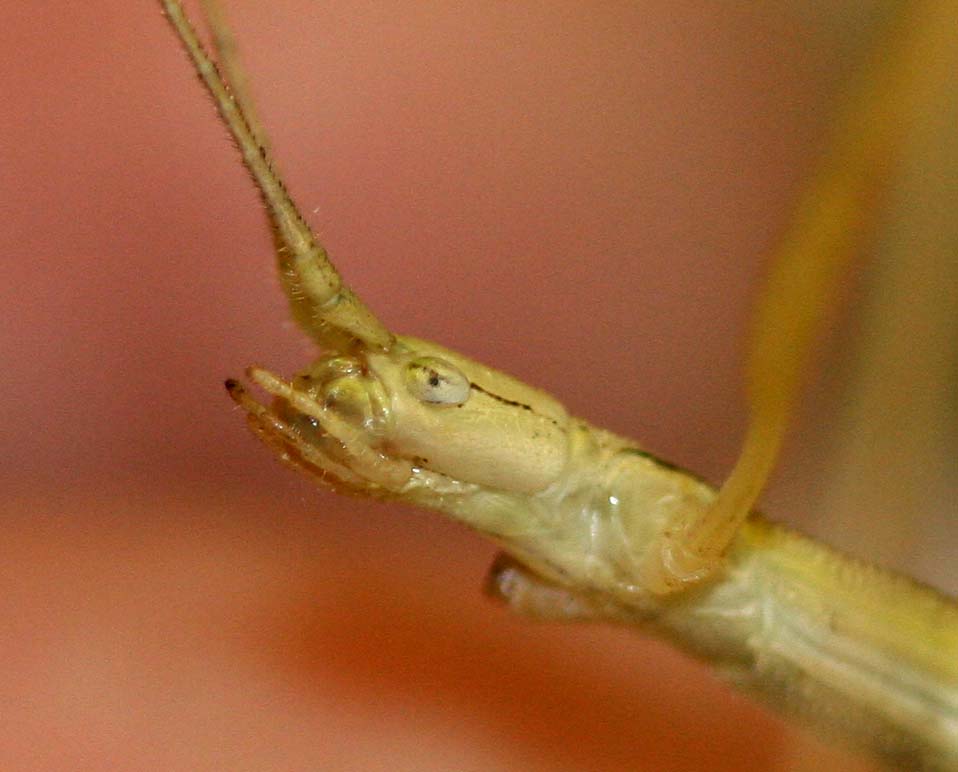
-

- Sipyloidea sipylus face
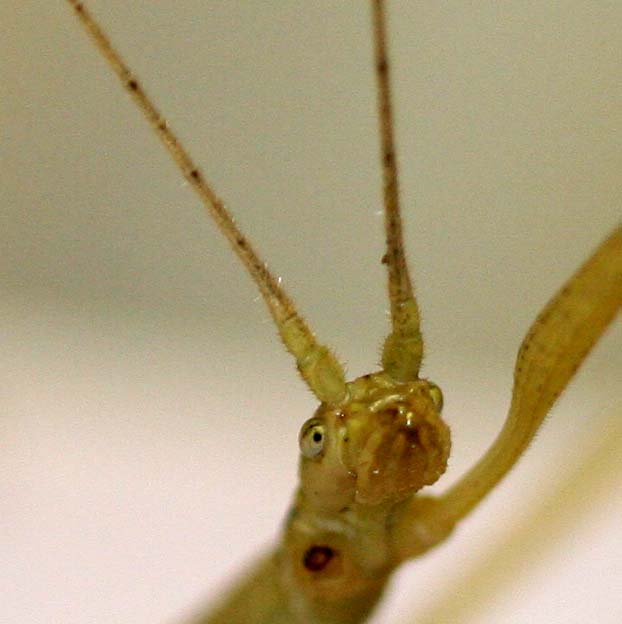
-

- Sipyloidea sipylus close up
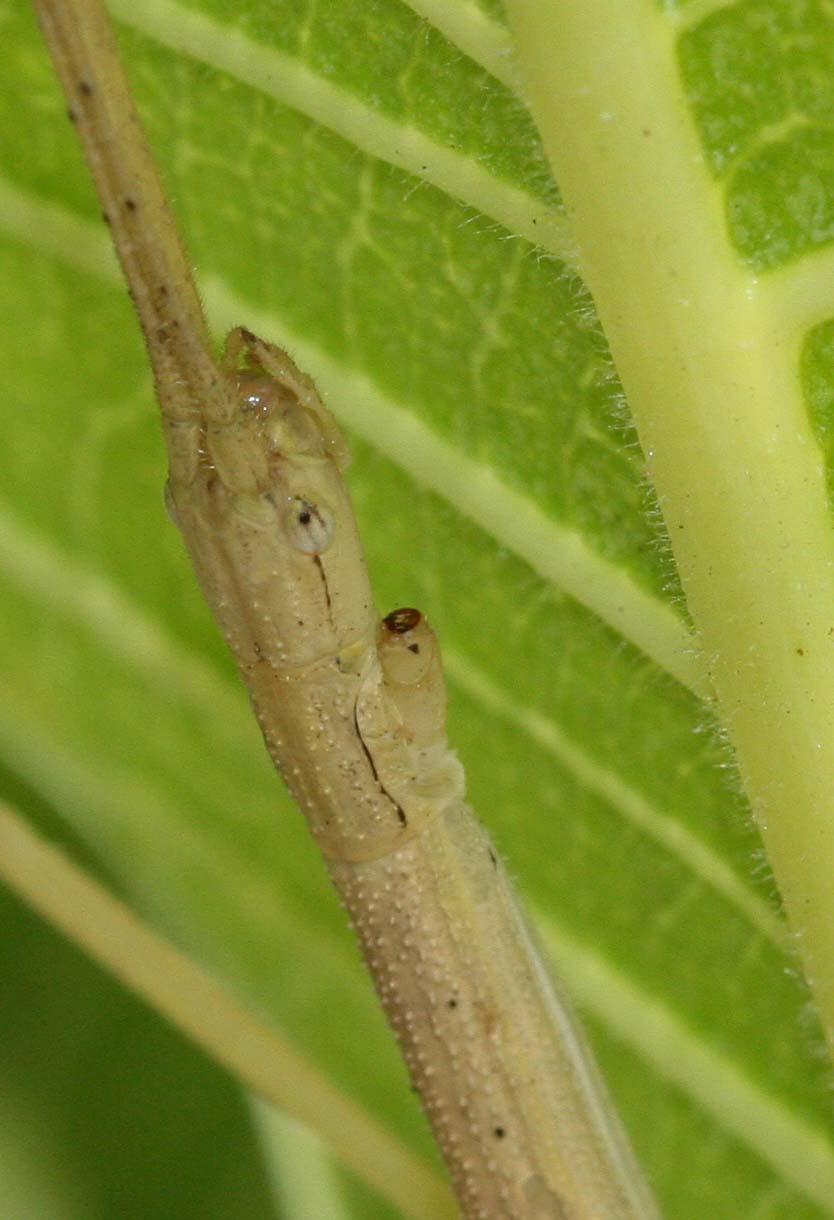
-
- Sipyloidea sipylus hiding under plumeria leaf
Some historical info on the green sphinx moth
Proceedings of the Hawaiian Entomological Society Vol. XVIII, No. 1, August, 1962, pps 121-122.
The Green Sphinx of Kauai
(Lepidoptera: Sphingidae)
E. H. Bryan, Jr.
Bernice P. Bishop Museum
Honolulu, Hawaii
(Submitted for publication August, 1961)
A specimen of a sphingid moth believed to be Tinostoma smaragditis (Meyrick), the famous “green sphinx of Kauai,” was collected at Halemanu, near Kokee, on July 7, 1961, by Kenneth E. Gouveia (fig. 1). While a student at the Kamehameha Schools, Honolulu, Mr. Gouveia had learned of this rare and elusive moth and had been watching for it many years. So when he saw a greenish-winged sphinx moth resting on the lid of a garbage can on the side of Kokee Road, he promptly captured it and later brought it to the Bishop Museum to make sure of its identity.
This is the second known specimen of this moth. The first one had been taken more than 65 years ago by ladies of the Gay family at their mountain home at Makaweli, Kauai, and given to Dr. R. C. L. Perkins. It was made the type of a new species by Edward Meyrick; the description and a colored plate appear in his paper on Hawaiian Macrolepidoptera [Fauna Hawaiiensis 1(2):191, 1899]. He remarked at the time that “this example has lost one antenna and the apical half of the other, and also both posterior legs; it is therefore impossible to determine its generic position…It is a remarkable and beautiful species and its fair captors might earn additional praise by discovering further specimens, and enabling its affinities to be accurately ascertained.” Walter Rothschild and Karl Jordan, in their huge monograph on the Sphingidae of the world, described a new genus for this single specimen which is preserved in the British Museum (Natural History), London.
As years went by, various entomologists tried to discover more specimens of this moth. B. Preston Clark, whose extensive sphingid collection lacked only a few of all the described species, employed J. August Kusche to make a special search for the green sphinx. According to Zimmerman’s account (INSECTS OF HAWAII 7:429, 1958) Kusche went to Kauai in 1919 and searched in the area from Kokee to to Kaholuamano without success, returning again to renew his efforts in 1920. No green sphinxes were caught, although he reported them flying about the Metrosideros trees always too high up for him to capture, and that he had collected, but failed to rear caterpillars which he considered to be those of the moth. However, Kusche’s accounts were not always reliable, and it is rather doubtful that he saw either the adults or caterpillars of the green sphinx. As late as 1928 Clark was still offering one hundred dollars for a good specimen of the moth. On his death his collection, still minus the green sphinx, was left to Carnegie Institute Museum, Pittsburg.
Superficially, the Kokee specimen differs from the type in details of coloration. The main differences are the absence of the dark spot on each forewing, with the apical margin only very narrowly brown; except for a basal purplish blotch on the forewing, the undersides of both wings are green instead of purplish ochreous; and the abdomen is green instead of purple fuscous, with no trace of orange on the dorsum as indicated for T. smaragditis by Zimmerman.
(For more recent info – check out the listing at the ICUN Red List Site)
Fly problems
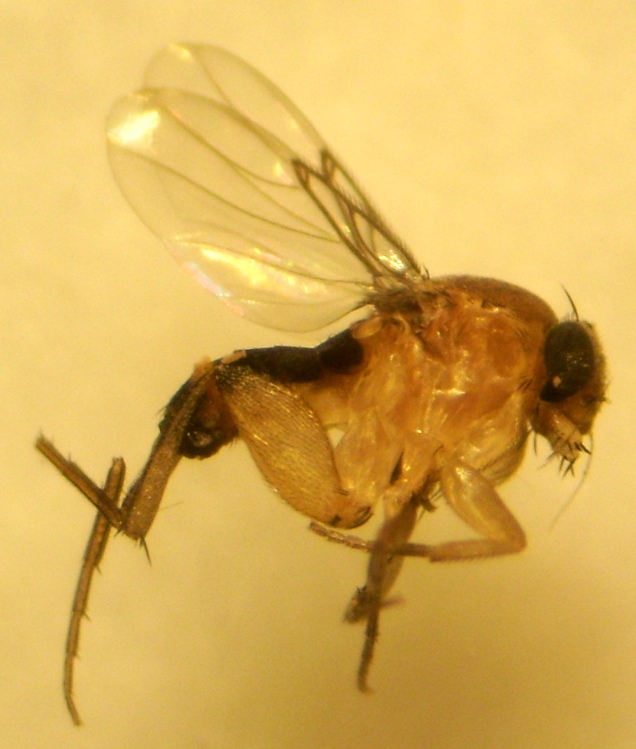
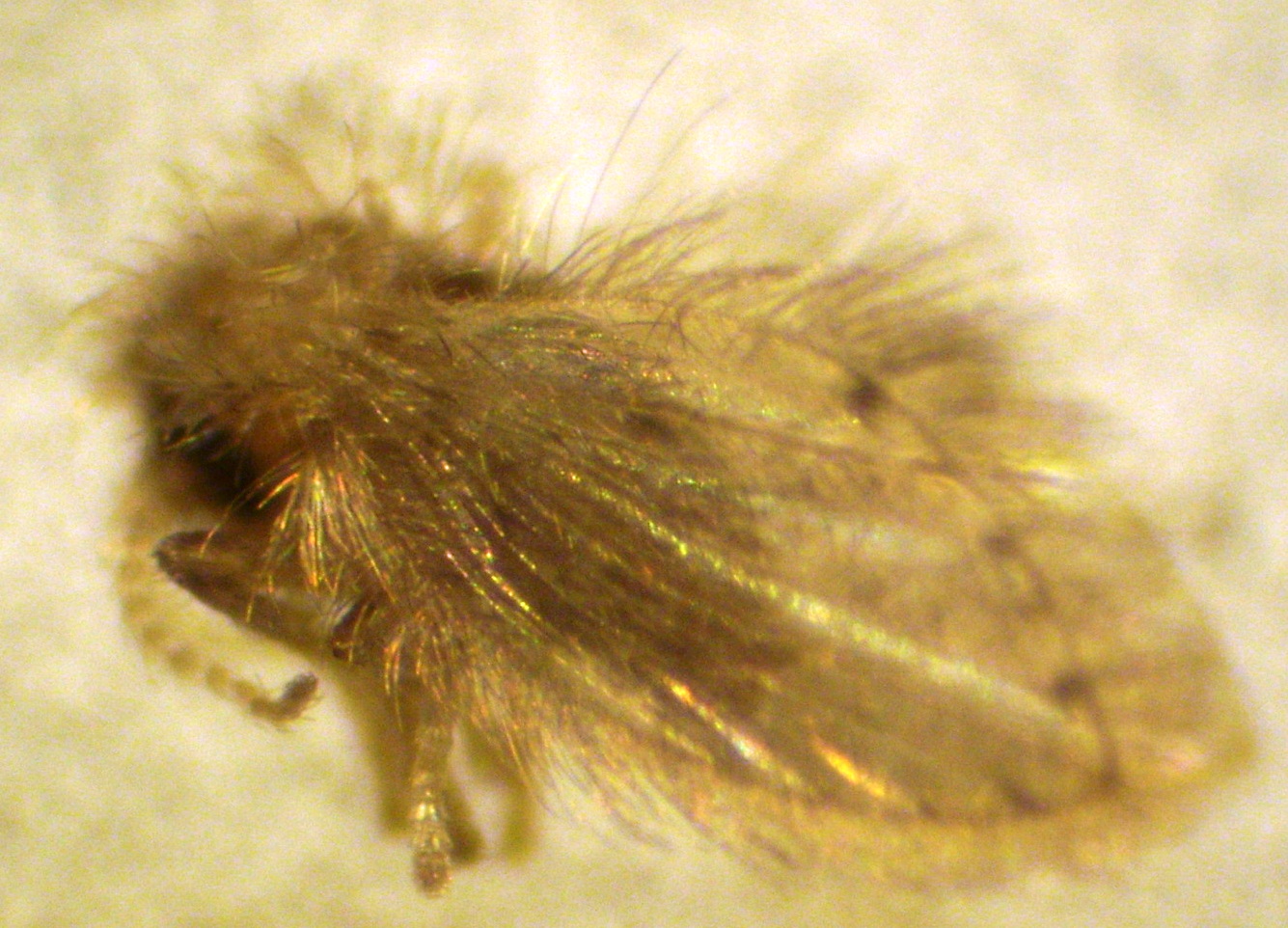
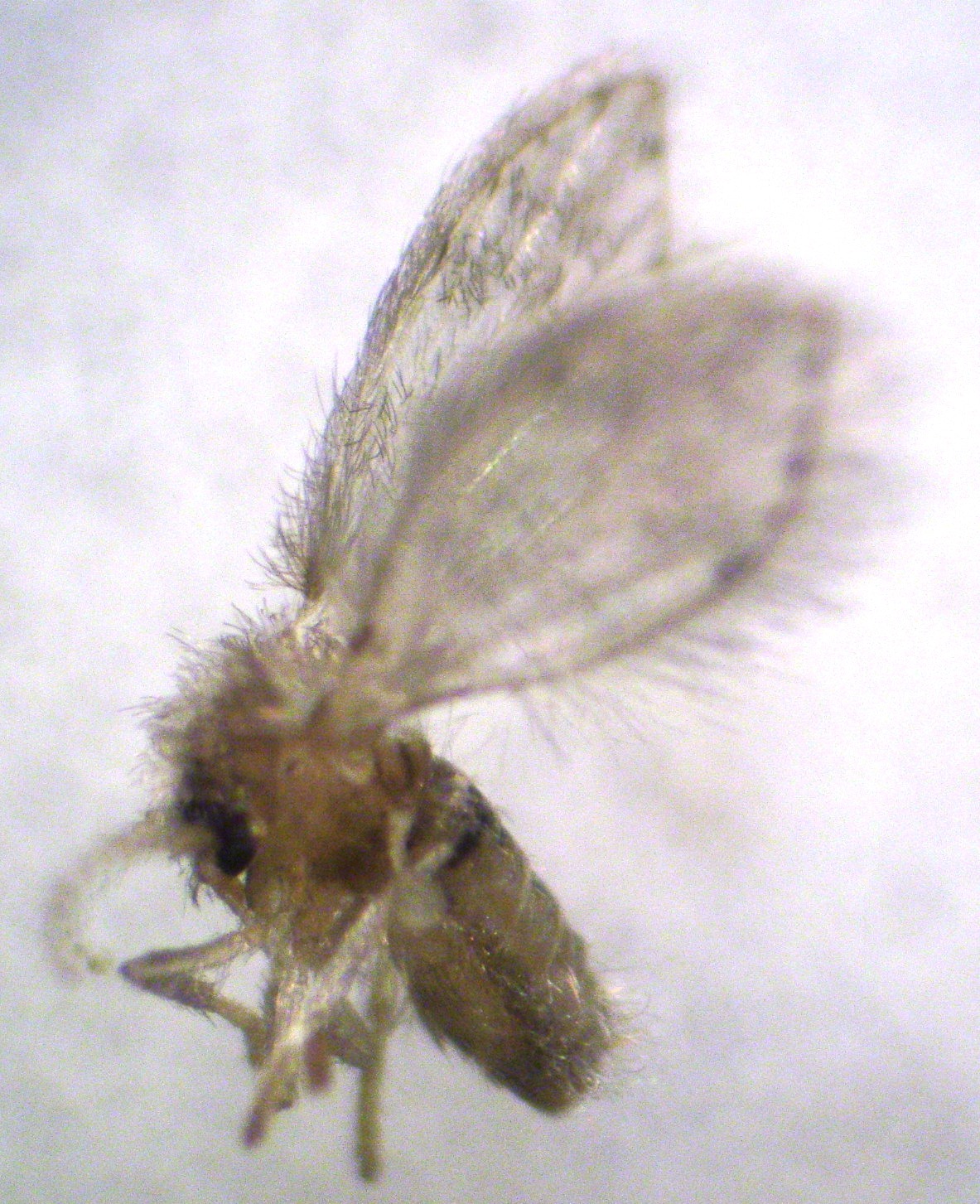
Earlier this week we were called to an area of the base on Pearl City peninsula to check to check out a fly problem. Evidently the problem has been persisting for some time, and the pest control shop called us in for a consult. We collected some specimens and it turns out they have two fly problems which appear to be unrelated – infestations of phorids and psychodids. We collected a lot of psychodids (Diptera: Psychodidae – drain flies or moth flies) from the shower, but other work spaces were infested with phorids (Diptera: Phoridae).
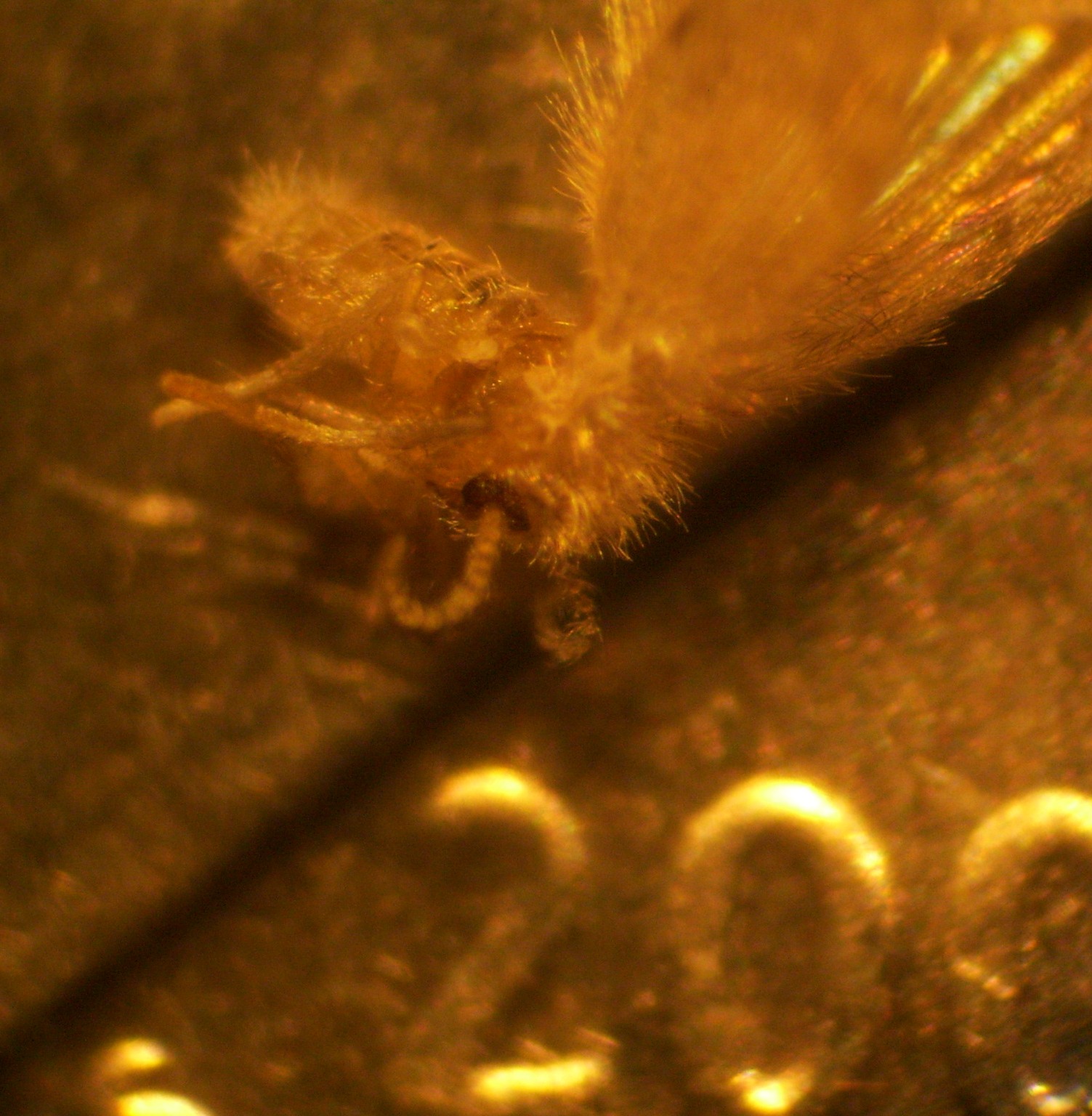
It seems pretty clear that the flies in the shower are breeding in the drain area. There was a long drain that spanned the length of the shower and was harboring a lot of scum. I was a little surprised though at how tiny the psychodids were – I am more used to seeing the larger blackish gray species. These were very tiny. One of the pictures below (sorry about the poor quality – I used my point-and-shoot through the miscroscope lens) was taken on a dime, just above the date, for scale. This should be a pretty easy fix. We’ll put together some options for them on what they can use to clean the drain and prevent the flies from breeding there.
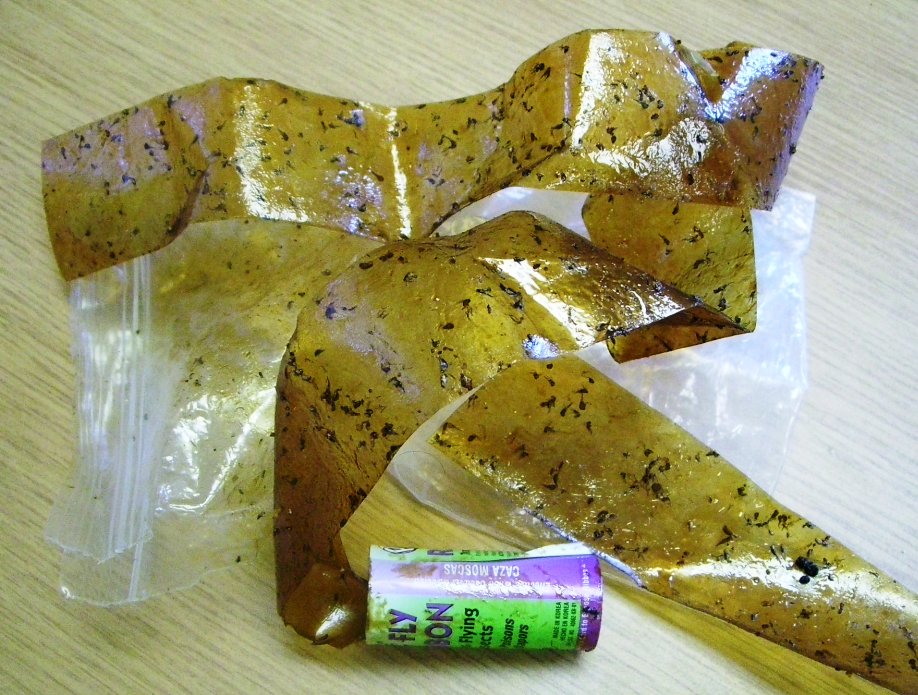
The phorids may be a different story. Below is a picture of a fly tape they had hanging in an office area – as you can see, it was covered with the flies. There were two separate buildings on the compound, and they both are having problems with the phorids. This leads me to believe that there may be an outside area where they’re breeding. There was a recent mangrove removal project on Pearl City peninsula in which they basically mulched the mangrove into large piles on the shore line. The mangrove mulch is not far from this particular compound, so I am curious if this is the source of the phorids. We need to go back and check this out.
-

- Fly tape covered with phorid flies.
-

- Phorid collected from a refrigerator.
-
- drain fly (psychodid) from shower
-
- Drain fly (psychodid) on a dime.
-
- Drain fly (psychodid) from shower.
Cryptoentomology
Cryptozoology seems to be one of the current fads in TV these days. There is Monster Quest on the History Channel, Destination Truth on the SciFi (Syfy?) Channel, and now it looks like MTV is putting togther a similar show. I am somewhat of a sucker for these shows, but I prefer they have a greater dose of reality than science fiction. I saw River Monsters for the first time last weekend and developed an immediate man-crush on the host, Jeremy Wade. I’ve lways been fascinated by fish and other mysterious critters that lurk in lakes, ponds, rivers, streams, etc., even to the point of having strange dreams about them (I usually wake up just before it looks like I’m going to be eaten). I think this comes from growing up in North Florida and spending a lot time around lakes and springs, but I’m not sure. Maybe I was a minnow in a previous life.
Anyway, these shows have got me thinking about about cryptozoological arthropods. I couldn’t really think of any legendary spiders or insects, so I looked up the subject on the internet. A quick search yielded a list of cryptids provided by the British Columbia Scientific Cryptozoology Club. Out of a total of 724 cryptids, only three are what they call “insects.” These are as follows: 1. Giant Centipede (USA) 2. Giant Spider (Various) 3. Madascan Hawk Moth. Under “invertebrates” they also listed a Deep Sea Spider (S. Pac. Oc.), but that was the only other arthropod, so that makes a total of 4 out of 724 for a whopping 0.5%. This seems strange since a conservative estimate of arthropod species puts them at 80% of all known animal species. Surely there should be more stories of mythical insects and other exoskeletal beasties flaoting around out there. I’ll have to do some more searching.
One reason for the disparity between the number of insect/arthropod cryptids vs. other animals could be size. Since the laws of physics, at least as we currently understand them, constrain arthropods from becoming collosal, perhaps stories of huge bugs are just too unbelievable. I think the largest known terrestrial arthropod is the coconut crab. They can be disturbingly large, but even they have their limits. This is an interesting image of a cocount crab – supposedly taken at Andersen Air Force Base on the island of Guam (although Snopes.com reports that it was taken on Christmas Island).

These crabs are huge, no doubt, but my personal opinion is that this image has been faked. First of all, it seems improbable that a crab of that size would exist on an inhabited ilsand. They are considered a delicacy, and where they coexist with people, they usually end up on a dinner plate before they can huge. Even on the Island of Diego Garcia, where some of the largest coconut crabs in the world exist (B.I.O.T. law on D.G. makes it illegal to catch and eat them), you do not see coconut crabs of this size. A coworker of mine did a study on the crabs there, so I could probably back this up with data if I had too. Secondly, a crab this size would probably be too heavy to be supported by a standing trash can – in reality I think it would tip over from the weight of the crab.
But getting back to the insects…there may not be too many tales of giant bugs roaming the earth, but I’m guessing there is no shortage of extremely rare insects that have been seen only once or a maybe a few times, or sightings of insects that are presumed extinct. A particular species that comes to mind in Hawaii is the Green Sphinx of Kauai or Fabulous Green Sphinx, Tinostoma smaragditis (Lepidoptera: Sphingidae). Only about a dozen specimens have ever been found, all from the Kokee region of Kauai. The larvae have never been found, and its host plants have never been identified. I am particularly interested in this moth because there is a good chance sometime later this year or early 2010 I will be participating in some surveys for endangered Hawaiian picture wing flies in Kokee. You can bet I’ll also have my eyes peeled for the Green Sphinx.
Bishop Musuem citations for Protaetia orientalis
If you perform a search for Protaetia orientalis in the Bishop Museum Hawaiian arthropod checklist database, you a citation list with a few references. I looked up the Hawaiian Entomological Society citations, and they both reference interceptions of P. orientalis from airplanes arriving at Honolulu from Japan.
“RECENT INSECT INTERCEPTIONS – Mr. Chilson reported the following major interceptions by Federal inspectors at the various airports on Oahu during the past three months. All specimens were taken alive on airplanes, and all originated in Japan, with the single exception noted: Popillia japonica Newman; Honolulu airport, July 3, Mueller coll. Hickam Field, July 11, Stout coll. Acrida turrita (L.); Hickam Field, August 12, Messersmith coll. Protaetia orientalis Gory & Percheron; Honolulu airport, August 15, Messersmith coll. Xylotrupes gideon (L.); from the Philippines; collected aboard plane by stewardesses, Honolulu airport, August 12 (Greenfield). Spondylus buprestoides (L.); Honolulu airport, in suitcase, August 23, Mueller coll.”
(Chilson, L. M. 1952. Proc Haw Ent Soc. 14(3):363)
“BEETLES INTERCEPTED IN QUARANTINE – Mr. Mahler exhibited the following scarabaeid adults recently intercepted at Honolulu: Anomala cuprea (Hope). Dead in plane from Japan. Honolulu airport, June 16, J. Nichols. Anomala sp. Dead in plane from Japan, Honolulu airport, July 16, H. Messersmith. Also collected at Haneda airport, Japan, O. O. Stout. Anomala sulcatula Burmeister. Alive on motor vessel a few miles out of Midway Is., June 26, G. Dyson. Reported common on deck of ship at Midway. Anomala viridana Kolbe (A. japonica Arrow). Alive in plane from Wake Is., Honolulu airport, July 2, Ray Greenfield. The pilot reported many of these beetles seen alive on Wake. Protaetia orientalis (Gory and Percheron). Alive in plane from Japan, Hickam Field, Honolulu, June 17, W. O’Sullivan.”
(Maehler, K. L. 1953. Proc Haw Ent Soc. 15(1):13)
| Proc Haw Ent Soc. 14(3):363 |
Scolependra subspinipes
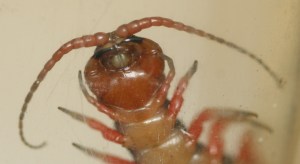
A coworker of mine was bitten by a centipede . Evidently it somehow crawled into his shirt and bit him three times as he was working in his garage. Here is a picture of the damage:

William's centipede bites
I also know a guy who had a centipede in his shoe, but did not realize the beast was there until hours of walking around with a dull pain in his foot and then finally noticing something crunchy between his toes (a similar incident occurred with me and a brown anole, but that’s another story).

According to Nishida and Tenorio (1993), there are at least 25 species of centipedes in Hawaii, among which several are native. The large centipede, Scolependra subspinipes (the one that bit my coworker), is probably the one that most people in Hawaii are familiar with. It is not a Hawaiian native, but has been around since about 1836 (Scott and Thomas 2000). I suppose it is debatable whether they are good or bad from a human perspective since they eat roaches, but being big, venomous, and full of legs makes them public enemy number one to most people. The first pair of legs is modified for predation and is capable of injecting venom. When someone is “bitten” by a centipede they have actually been punctured by these sharp, poisonous appendages. If you’re a skilled (and sadistic) bug wrangler, you can clip these legs and then handle the ‘pede without the risk of being bitten. I’d like to to try this sometime, but it actually seems kind of cruel, so I probably never will…no matter how much I want to impress my friends and neighbors.

 Entophile Shop


 Entophile